
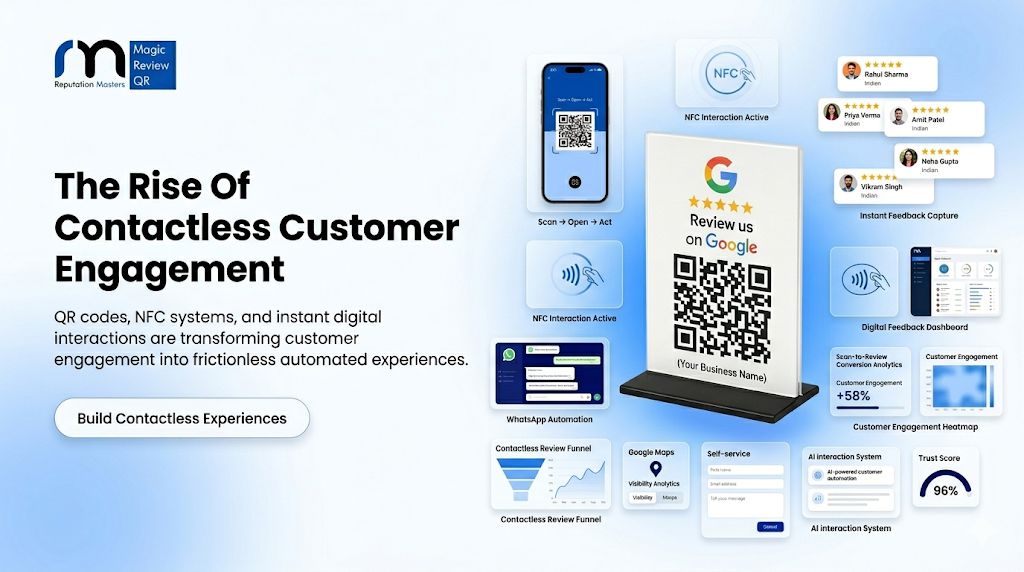
Customer engagement is undergoing a major shift. Businesses are moving away from manual interaction, physical forms, and human-dependent processes toward contactless, instant, and digital-first customer experiences.
This change is not just about convenience — it is about speed, scalability, and behavior change in customers.
1. What Contactless Customer Engagement Means
Contactless engagement refers to any interaction where a customer can:
-
take action without physical contact
-
avoid waiting or manual steps
-
interact through mobile or digital tools
Examples include:
-
QR code scans
-
NFC tap interactions
-
WhatsApp automation
-
digital payment systems
-
online feedback and review systems
In simple terms:
Customers interact without friction, forms, or human dependency.
2. Why Contactless Engagement Is Growing
Several behavioral and technological shifts are driving this change:
-
Smartphone usage is now universal in India
-
Customers prefer instant actions over delayed processes
-
Businesses want scalable systems without staff dependency
-
Digital trust signals (reviews, ratings) are more important than physical marketing
The result is a shift toward self-service customer interaction systems.
3. QR Codes and NFC Are Leading the Shift
QR codes and NFC taps are becoming the backbone of contactless engagement because they:
-
require no app installation
-
work instantly on smartphones
-
reduce steps between intent and action
Examples in real business use:
-
scanning to leave Google reviews
-
tapping to pay bills
-
scanning to access menus
-
tapping to submit feedback
These tools turn physical spaces into interactive digital entry points.
4. From Manual Processes to Instant Actions
Earlier customer engagement looked like:
-
filling feedback forms
-
asking staff for help
-
manual review requests
-
delayed SMS follow-ups
Now it is shifting to:
-
scan → open → act
-
tap → confirm → submit
This removes delays and increases participation rates significantly.
5. Contactless Systems Improve Conversion Rates
The biggest advantage of contactless engagement is reduced friction.
When fewer steps are involved:
-
more customers complete actions
-
more reviews are submitted
-
more feedback is collected
-
more payments and bookings happen
Even small reductions in effort lead to large increases in participation.
6. Role in Reputation Building
Contactless engagement directly impacts online reputation systems.
For example:
-
QR review systems capture feedback instantly
-
NFC stands collect reviews at peak satisfaction
-
WhatsApp automation follows up automatically
This leads to:
-
higher review volume
-
better review consistency
-
improved Google Maps visibility
7. Businesses Become Self-Service Systems
Contactless engagement is turning businesses into:
-
self-service ecosystems
-
automated feedback machines
-
always-on interaction points
Customers no longer wait for staff — they initiate actions themselves.
8. Customer Experience Becomes Faster and Simpler
Modern customers expect:
-
no waiting time
-
no complicated steps
-
instant access to services
Contactless systems meet this expectation by:
-
removing manual processes
-
enabling instant digital actions
-
simplifying every interaction point
9. Impact on Small and Local Businesses
For SMEs, this shift is especially important:
-
reduces dependency on staff behavior
-
increases review generation automatically
-
improves customer satisfaction capture
-
enhances digital visibility without extra marketing spend
Even small improvements in engagement flow lead to higher revenue impact.
10. The Future of Contactless Engagement
In the future, contactless engagement will evolve into:
-
AI-driven interaction systems
-
fully automated customer journeys
-
predictive engagement triggers
-
integrated offline-to-online ecosystems
Physical business locations will act as digital interaction hubs, not just service points.
Final Summary
The rise of contactless customer engagement is driven by:
-
demand for instant actions
-
smartphone-based behavior
-
QR and NFC adoption
-
need for scalable systems
-
importance of digital trust signals
It is transforming businesses from manual interaction models into automated, frictionless customer ecosystems.
magic review qr